The ampersand is a misunderstood creature. While many believe it exists primarily for the ‘& sons’ of fathers or the ‘& partners’ of lawyers, the ampersand has a rich history than spans continents, cultures and millennia. The ampersand as we know it is evolved in from humble beginnings.
Before we begin, a brief taxonomy and definition will stand us in good stead as we navigate the roads of history. The ampersand is a ligature, which means that it is a printed or written character combining two letters – such as ‘æ’. In the case of the ampersand the letters are ‘e’ and ‘t’, creating the word ‘et’. At least, that’s how they began. I know, mind blown.
Gracing humankind for about 2000 years, the ampersand can trace its lineage to one of the most impressive father’s of language, Cicero – or his scribe at least. Cicero was a great orator and spoke often, and at great length. He had a personal scribe who would follow him around recording his wisdom. In order to keep up with his master’s elocution the scribe, Tiro, created a shorthand to record Cicero’s speeches – one of the earliest in record. One element of this shorthand is now known as ‘The Tironian et’. Et, as the lating lovers will now, means ‘and’. It looked a bit like a seven and can be seen below. Eventually, The Tironian Et gave way to something more akin to the modern ampersand, which looked more like a ligature of ‘e’ and ’t‘. It is only fairly recently, around the 16th century, with the introduction of the printing press, that the symbol distorted to look more like an hastily closed eight.
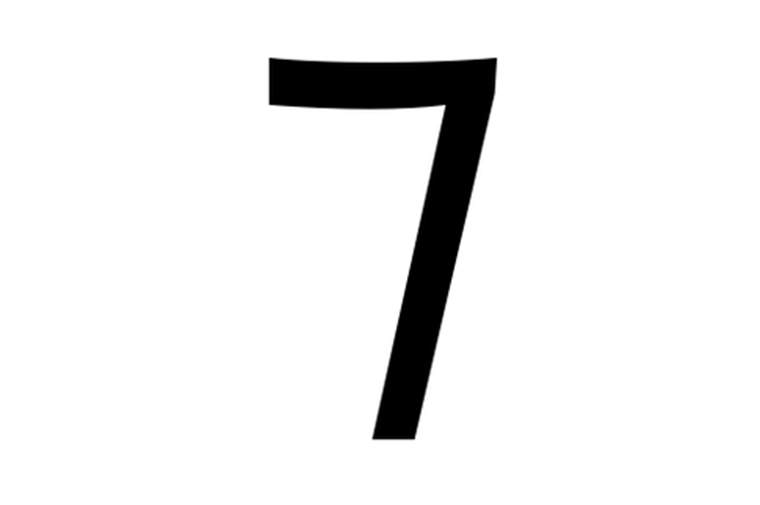
The Tironian et
But it is not only its appearance that has grown over time. The name, too, has changed with the times. The name ‘ampersand’ is a mondegreen. A mondegreen is a word that exists due to a mispronunciation of another word and was coined by Sylvia Wright in her essay ‘The Death of Lady Mondegreen’. How so? What has been mispronounced to give us the pronunciation of the symbol before us? Well, in the early 19th century, the schoolchild sing-song recital of the alphabet would include ‘and’ at the end, and this was considered to be the 27th letter of alphabet. It would sound infuriatingly unfinished if children were to go ‘X, Y, Z, and’. That ‘and’ could keep you up at night. The term per se, meaning by itself, was added to the end in order add closure to the recital. The alphabet would then finish, ‘X, Y, Z, and per se. The word as we know it now came from the eventual evolution of this final, forgotten, letter of the alphabet.
To answer our next question – ‘why do we care?’ – we will travel back in time to 1450 Germany where man by the name of Johannes Gensfleisch zur Laden zum Gutenberg was changing the world. After several failed investments into mirrors and a small fortune owed to his brother-in-law Johannes Gutenberg is about to produce the first movable type printing press, a reveal which will not make hundreds of monks obsolete but will also result in the first giant leap towards open dissemination of information. Looking back, he could be seen as the source of many a present woe.
The press had been created by Gutenberg between around 1435 and 1450 and was launched with the help of Andreas Dritzen, a retired gem-cutter and Andreas Heilman, a paper mill owner. Due to Gutenberg’s failed investments with mirrors and a minor law-suite or two, he wasn’t able to fully realise his press until about 1450 once he cleared his debts. He had, however, been working on the idea of the press for about a decade prior.
The press allowed, for the first time in history, the large-scale production of words. This, arguably, sparked a shift in consciousness throughout Europe. In turn, this shift would ultimately lead to the ideals of freedom, equality, and democracy and the formation of all Christian sects not Catholicism – a separate story.
Before the press, the only way to write a book was to get someone with great handwriting to sit down and transcribe it. This was usually a monk, and the book was usually the bible. This meant that books were rare, writing was scarce and non-monk literacy was virtually non-existent. While the printing press would ultimately lead to the dissemination of a variety of books, or Incunobulars, as they were then termed, it is the Gutenberg Bible that is his most famous work. Despite this, the press would present one of the single greatest blows against the church’s centralisation of power in Europe in recorded history.
While many people are familiar with the Gutenberg Bible, the bible doesn’t use the ampersand and is thus not immediately important to us. Gutenberg was in operation for years before this most lucrative contract appeared. Perhaps his most successful operation before the bible was the production of Indulgences, a somewhat bizarre moral loop-hole created by the church to gather funds. In early Catholicism, followers were told that, upon death, they would spend time in Purgatory proportional to their sins before ultimate judgement. However, if they were to purchase Indulgences from the church, they would be absolved of some sins and their time in Purgatory would be lessened. The followers would purchase these Indulgences from the church in order to help fund the church’s next project – war against Turkey or the building of the next cathedral. The Indulgences were quickly exploited. It hadn’t taken long for people to start purchasing Indulgences before their sin, in effect, buying permission to sin before the fact. Due, in part, to the exploitation of the system, followers were not content simply with a priest’s word of their absolution, but wanted an object to show their support for the church, and their permission to sin. This is where Gutenberg came in. He used his press to create an assembly line of these permission slips, each one signed by a representative from the church.
All of this, while interesting, doesn’t get us any closer to the crux ampersand. The answer lies in the way the machine works. The press works essentially like a giant stamp. A typeset, made of individual letters, would be loaded onto a giant platform and covered in ink. The typeface would then be pressed onto paper, transferring the ink and creating a page of writing. While this was infinitely quicker than handwriting each page, the moving and removing of letters was laborious and letters were not infinitely repeatable. It then made sense for ligatures – single symbols representing often-repeated letter pairs – to be included into the typefaces. Gutenberg et al., decided to resurrect the Roman ligature of ‘et’. As it was not extremely important for the character to look like et the ligature was designed to look more similar to the ampersand we know today. Although Gutenberg’s first typefaces were created to look similar to handwriting, in time they would evolve into the squared-off sans serif or serif fonts we know today.
And so, we conclude the strange, mildly chaotic history of the ampersand. From Roman scribes, to pious sinners, to sloppily recited alphabets, the ampersand perseveres into what we have now, a design icon and a damn good muse for a website.
 Rafael Powell
Leave a comment